


Selling a Car on Consignment vs Private Party: How Long Does Each Take
Consignment can shorten the selling process: consigned vehicles typically sell in about 45 days, while private sellers take about 15 additional days. The choice between selling a car on consignment versus selling it to a private party comes down to more than timing, though.
A private sale gives you direct control over the asking price and negotiations, but you handle inquiries, buyer meetings, and paperwork yourself. With consignment, a dealer manages much of the selling process for an agreed fee, while you have less direct control.
This comparison explains how vehicle value, preparation, buyer questions, and negotiation can affect the process and your potential proceeds. You’ll learn which option may suit your priorities, what can slow a sale, and how to weigh a managed sale against the hands-on work of a private transaction.
Table of Contents
Choosing a selling method by vehicle value and circumstances
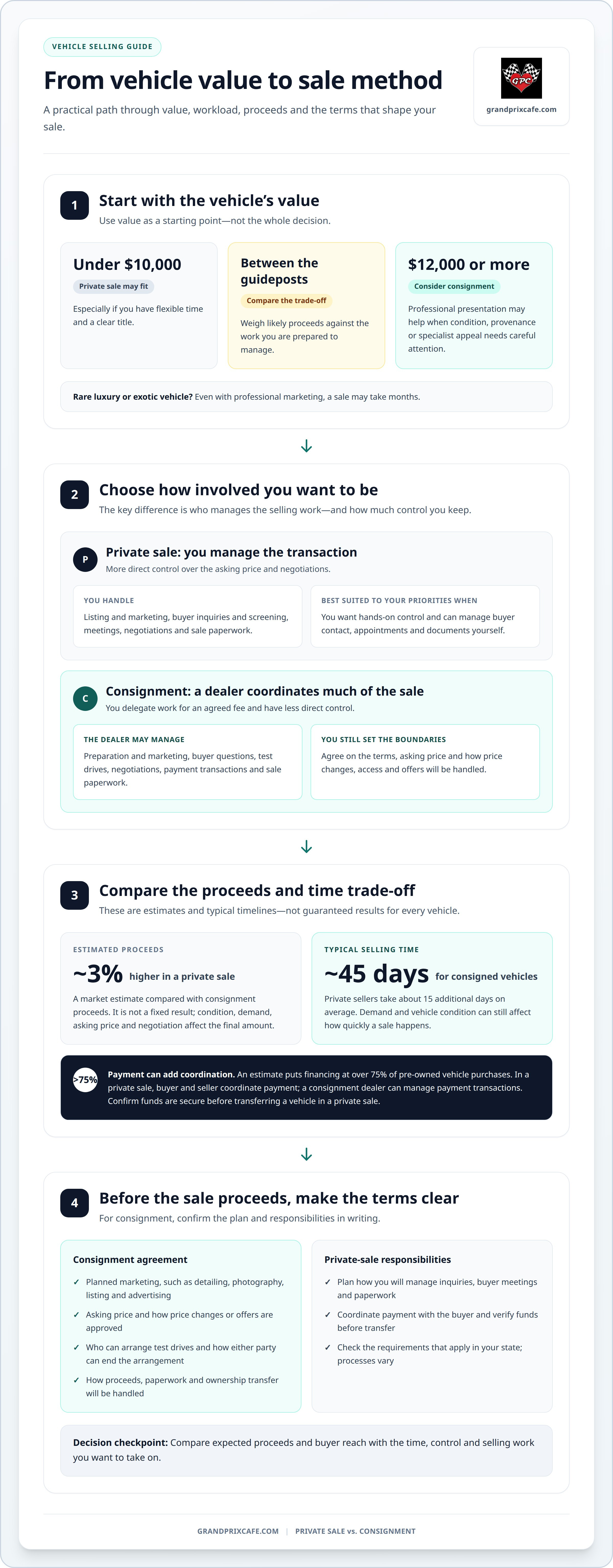
Vehicle value offers a useful starting point, not a complete decision. A private sale may suit a car worth under $10,000 when you have flexible time and a clear title. Consignment is worth considering for a vehicle worth $12,000 or more, especially when its condition, provenance, or specialist appeal needs careful presentation. For cars between those ranges, compare the likely sale proceeds with the work you’re prepared to manage.
How a vehicle is presented can shape buyers’ impressions. A consignment dealer may arrange detailing, photography, and a listing, with consistent images and a clear description. Marketing can include a dealership website, showroom, and advertising, while syndication may place the listing across multiple sales channels. Before signing, confirm in writing what marketing is planned and how the asking price and offers will be handled.
Consignment can reduce your day-to-day involvement, but the agreement sets the boundaries. It should specify the asking price, how price changes are approved, who can arrange test drives, and how either party can end the arrangement. In a typical luxury-car consignment, you retain legal ownership until the sale. Because title and paperwork arrangements can vary, make sure the written terms explain how ownership will transfer.
Rare luxury and exotic vehicles can take months to sell, even with professional marketing. In a private sale, you control viewing times and negotiations, but also handle inquiries, appointments, and paperwork. With consignment, you delegate much of that work. The right fit depends on your vehicle’s audience, the time you can commit, and how much control you want over each stage.
Compare the expected proceeds, potential buyer reach, and how much selling work you want to handle.
What Is a Private Sale?
In a private sale, you market the vehicle and manage the transaction yourself: creating the listing, answering inquiries, screening buyers, negotiating, and completing paperwork. A dealer trade-in is different: the dealer buys your vehicle as part of a separate transaction. With consignment, the dealer markets and sells your car under agreed terms.
A market estimate places private-sale proceeds about 3% above consignment proceeds. The difference reflects the trade-off between handling the sale yourself and delegating work to a professional; it isn’t a fixed result for every vehicle. Condition, demand, asking price, and negotiation can all affect the final amount.
In a typical consignment process, you and the dealer agree on the terms before the car is marketed. The dealer may prepare the listing, promote the vehicle, respond to potential buyers, arrange test drives, negotiate, handle payment, and manage sale paperwork. The agreement should define your role and explain how the sale proceeds will be handled.
Buyer financing can also affect the transaction: an estimate puts financing at over 75% of pre-owned vehicle purchases. In a private sale, the seller and buyer coordinate the payment arrangement. A consignment dealer can manage buyer interactions and payment transactions. A trade-in instead involves a dealer valuing the vehicle as part of a purchase.
Dealership marketing may use a website, showroom, and advertising to reach potential buyers. With a private listing, you handle the marketing and responses yourself. Broader exposure can bring inquiries, but demand and the vehicle’s condition still affect how quickly it sells.
Rules for private sales and dealer transactions vary by state. For a New York sale, follow the requirements that apply there; don’t assume another state’s process applies.
Choose a private sale if you want direct control and can manage buyer contact and paperwork. Choose consignment if you want a dealer to coordinate marketing, test drives, negotiation, payment, and sale documents.
How professionals handle buyer questions and negotiations
Responding to buyer inquiries takes time. Questions may cover condition, provenance, service records, and price. In a private sale, you answer them and decide which inquiries merit a response. A consignment professional can present vehicle details consistently, answer routine questions, and bring serious interest to your attention. That can keep discussions focused on the car’s documented condition and sale terms.
Dealership marketing can present a vehicle through a website, showroom, and advertising, giving potential buyers several ways to find the listing. A professional can also qualify inquiries, coordinate test drives, and manage buyer communication. You can set expectations for access and price in the consignment agreement, rather than handling every initial contact yourself.
Payment can add complexity to a private sale. A buyer may need to arrange financing, and you need to confirm that payment is complete before transferring the vehicle. Risks include fraudulent payment claims, disputed transactions, and handing over the car before funds are secure. A consignment dealer can manage payment transactions and sale paperwork, reducing your direct role in the exchange.
Privacy is another difference. A private listing may involve direct communication with prospective buyers and arranging meetings. With consignment, inquiries can be pre-qualified before your contact details are shared. Test drives can be coordinated through the dealership, so you don’t have to manage initial buyer contact and scheduling at home.
Negotiations also differ. As a private seller, you respond to offers and decide whether to counter, hold firm, or change the asking price. A consignment professional can negotiate on your behalf and use retail market data to support the asking price. The agreement should say who approves price changes and which offers need your decision.
For a classic car with detailed service records, professional handling can organize buyer questions, viewings, and negotiations. With a private sale, you manage those tasks yourself. Consider how much direct contact and transaction management you want.
Choosing between consignment and private sale
The choice comes down to proceeds, time, and personal involvement. A private sale avoids an intermediary fee, but you handle advertising, inquiries, appointments, negotiations, and paperwork. Consignment assigns much of that work to a professional, while you agree to the terms and sale process.
Those figures illustrate a scenario, not a forecast for every car. Condition, demand, pricing, and negotiation affect the outcome.
Time matters too. Consigned vehicles typically sell in about 45 days, while private sellers take about 15 additional days compared with dealers or consigners. A private sale can also require 15-30 hours of seller labor. For a seller with limited availability, the work delegated through consignment may outweigh a potential difference in proceeds.
Choose a private sale if direct control matters most and you can manage the workload. Choose consignment if delegated marketing and buyer communication better fit your schedule. For a classic or specialist vehicle, consider whether professional presentation and access to buyers suit its market.
Discuss your vehicle sale if a professionally managed process fits your priorities.
Grand Prix Cafe: Vehicle Consignment Services
Grand Prix Cafe offers Vehicle Consignment Services for owners who prefer professional support marketing and selling a vehicle. This can suit sellers who want help managing buyer inquiries and negotiations rather than handling each interaction privately. The vehicle’s condition, presentation, and market demand remain important factors in the sale.
For a classic car, Grand Prix Cafe also offers Classic Car Sales. Car Service and year-round indoor car storage can support owners’ broader vehicle needs, including care and protection between driving seasons.
If consignment suits your priorities, contact Grand Prix Cafe to discuss selling your vehicle.
Choose the selling process that fits your priorities
Start by deciding what matters most: direct control, fewer selling tasks, or a balance between the two. Selling a car on consignment versus selling privately is not simply a choice between speed and proceeds. It also determines who manages buyer contact and how closely you take part in each decision.
Before deciding, consider your vehicle’s condition, its likely audience, and the time you can devote to selling it. Bring those priorities into a conversation about your options. Clear expectations make it easier to judge whether a professionally managed sale suits your circumstances.
Grand Prix Cafe offers Vehicle Consignment Services, Classic Car Sales, and Car Service. If you’re considering consignment, contact Grand Prix Cafe to discuss your vehicle and the next step. A considered plan can help you move toward a sale with greater clarity.
Frequently Asked Questions
How long does it take to sell a car on consignment?
Consigned vehicles typically sell in about 45 days, while rare luxury and exotic models can take months. Timing depends on buyer demand, condition, asking price, and how specialized the vehicle is. A rare specification may require a longer search for the right collector than a more commonly sought model. Use the estimate for planning, not as a promised completion date.
How does selling a car on consignment work compared with selling it privately?
With consignment, you agree to terms with a dealer, who markets the vehicle and manages much of the sale. In a private sale, you create the listing, communicate with buyers, negotiate, and complete the transaction yourself. For example, if you have limited time, delegated buyer handling may suit you; if you want direct control, a private sale may be a better fit.
What fees and commission do car dealers charge for consignment sales?
Automotive consignment agents typically charge 5% to 15% of the vehicle’s sale price. The actual agreement determines how the fee is calculated and whether separate expenses apply. Before signing, request a written breakdown covering commission, preparation, advertising, storage, and any other charge. Compare the estimated net proceeds with a private sale, where listing expenses and seller time still matter.
What are the pros and cons of car consignment versus private-party selling?
Consignment can reduce your workload, but the commission reduces your proceeds and the agreement shares control with the dealer. A private sale avoids an intermediary commission and gives you direct control, but takes more time and buyer contact. For a collectible with a specialist audience, weigh professional marketing against the value you place on negotiating yourself.
What steps does a professional handle when selling a car privately in the United States?
In a private sale, you manage the process yourself rather than using a consignment agent. With consignment, a dealer can create and promote the listing, respond to inquiries, qualify buyers, coordinate test drives, negotiate, and manage payment and sale paperwork. For example, the dealer can organize buyer questions about service records and vehicle condition before arranging a viewing.
What should a car consignment agreement include, and how can sellers avoid hidden fees?
A clear agreement should state the commission, asking price, approval process for price changes, expected term, cancellation terms, and responsibility for insurance coverage. It should also identify charges for preparation, advertising, storage, or other services. Have every cost and deduction written into the terms before signing. That makes it easier to understand and compare your expected net proceeds.
Comments