


How to Remove Musty Smell in a Vintage Car in East Hampton
A fragrance can hide a musty smell, but it cannot remove its source. To remove a musty smell in a vintage car in East Hampton, find and fix the moisture source, then clean and dry affected materials. Mold and mildew can return if the interior is not completely dry.
A closed-up classic can hold dampness in carpets, upholstery, and less visible areas. Blocked drains or worn seals may also let moisture in. Treat the odor as a reason to investigate, not as something to cover with a scented product.
This guide explains how to check for leaks and dampness, clean soft surfaces carefully, and investigate odors from the climate system. You’ll also learn how to prepare a vintage car for storage to help protect its interior from lingering moisture.
Table of Contents
Smell from Moisture Sources
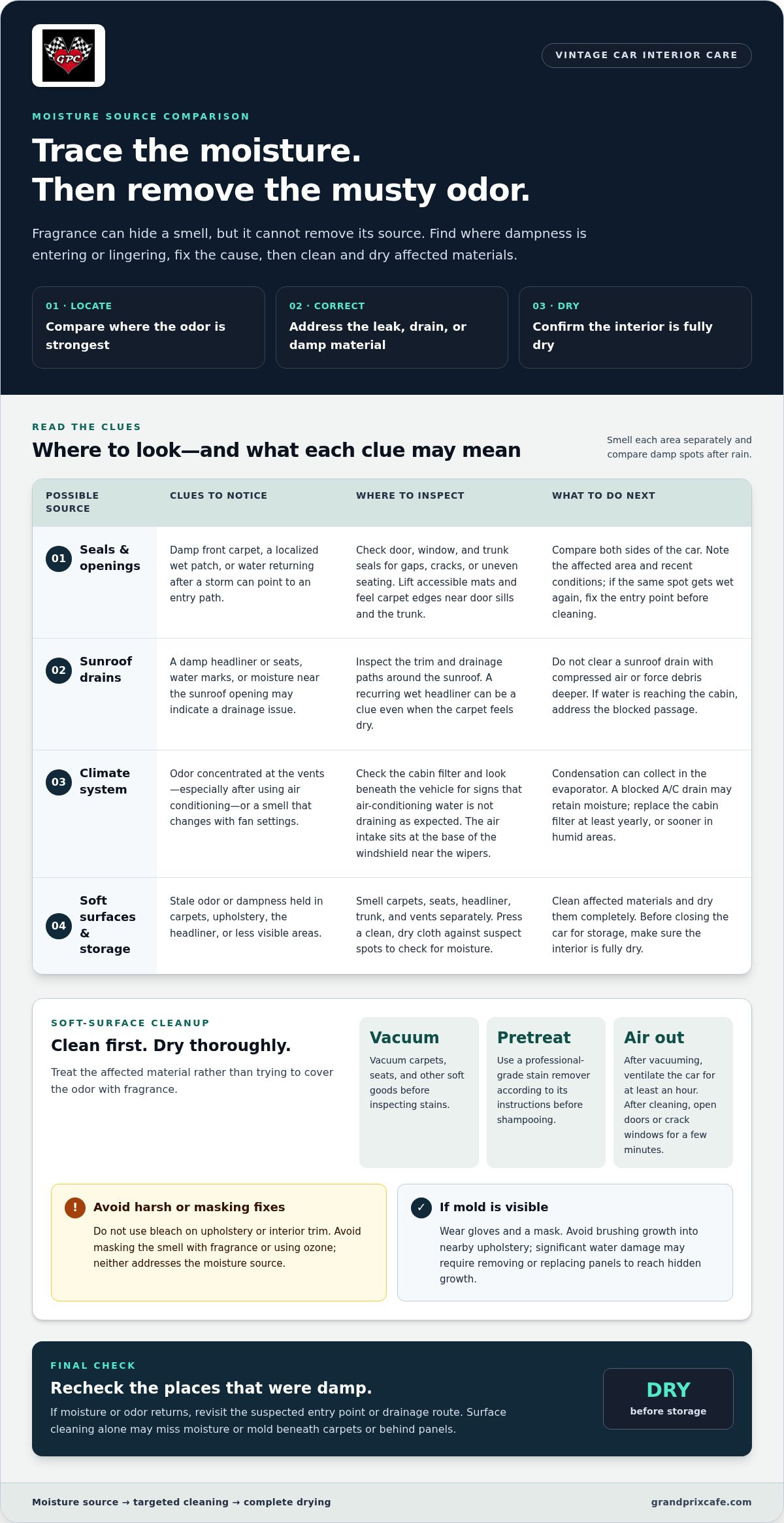
Start by locating where the odor is strongest when addressing a musty smell in vintage car removal East Hampton. Smell the carpets, seats, headliner, trunk, and cabin vents separately. A damp front carpet suggests a different leak path from an odor concentrated near the rear window. Press a clean, dry cloth against suspect areas to see whether it picks up moisture. Inspect the car after rain, since water can enter through worn seals, cracked windows, or a leaking sunroof. Note the affected areas and recent conditions. This simple record can narrow the search before cleaning and help you spot returning moisture.
If the headliner or seats feel damp, inspect the sunroof and its drainage paths. Clogged drain holes can let water seep into the roof liner or drip onto seats. Look for damp trim, water marks, or moisture near the sunroof opening. Don't clear a sunroof drain with compressed air, which can damage it. If the passage appears blocked or water is reaching the cabin, avoid forcing debris deeper. A recurring wet headliner points to the drainage route, even if the carpet seems dry. Correcting the source matters more than treating the fabric alone.
Check door, window, and trunk seals for gaps, cracks, or areas that no longer sit evenly. Water entering through worn seals can remain trapped beneath carpets or upholstery. Lift accessible floor mats and feel the carpet edges, including near the door sills and trunk opening. Compare both sides of the vehicle, since a localized wet area can reveal the leak path. After a storm, inspect damp areas and dry them promptly. If the same spot gets wet again, cleaning the carpet without fixing the entry point leaves the underlying cause unresolved.
Investigate the climate system if the odor comes from the vents, especially after using air conditioning. Condensation can collect in the evaporator, where bacteria or mold may form. Most evaporator water should drain beneath the vehicle. A blocked air-conditioning drain can retain moisture and produce a musty odor. Look beneath the vehicle for signs that water is not draining as expected, and note whether the smell changes with the fan or climate settings. The air intake, or plenum, sits at the base of the windshield near the wipers. These clues can help distinguish vent odor from damp upholstery.
Prepare fabric surfaces before applying cleaner. Vacuum carpets, seats, and other soft goods thoroughly, then inspect for stains. This removes loose dirt and reveals marks that need targeted treatment. Pretreat stains with a professional-grade remover, following its instructions before shampooing. Don't use bleach on upholstery or interior trim, as it is too harsh for those materials. To use baking soda, leave it on carpets and upholstered seats for several hours, then vacuum it away. Ventilate the car for at least an hour after vacuuming. Focus on affected materials rather than masking their odor.
Include the cabin filter and storage conditions in your inspection. Replace the cabin air filter at least once a year, or sooner in humid areas. A dirty filter can affect airflow and may contribute to stale air from the vents. Check it when investigating a climate-system odor rather than treating cabin surfaces alone. Before closing a vintage car for storage, make sure the interior is completely dry. Remove dirt, stains, grease, and moisture from the vehicle; leftover dampness can encourage mildew. If a storm leaves carpets or upholstery wet, dry them before closing the car up again.
After cleaning, open the doors or crack the windows for a few minutes to circulate air. Then recheck the areas you mapped for moisture or returning odor, especially where dampness appeared before. If the smell persists, revisit the suspected entry point or drainage route instead of treating the fabric alone. Your earlier checks can help distinguish a recurring source from odor left on a surface. Keep the interior accessible while it airs, and confirm the affected area stays dry before considering the cleanup complete.
Detailing a classic car before storage means removing dirt, stains, grease, and moisture from both its interior and exterior. When prepping vehicles for clients, Grand Prix Cafe emphasizes attending to the cabin as well as the outside, so possible sources of mustiness are not left behind. Recheck the cleaned surfaces and the areas noted during your inspection to make sure no moisture has been overlooked before storage.
Musty odors
Remove the odor source before applying a deodorizer. Scented soap or a fogger can cover a smell without removing trapped moisture, mold, or mildew. Begin by checking seams, carpet edges, trim joints, and the trunk by hand. This helps identify areas needing focused attention, including crevices a standard wash may miss. Pay particular attention to carpets, upholstery, and the headliner, which can hold odors. Removing a musty smell in a vintage car in East Hampton starts with identifying affected materials, not adding fragrance.
Clean soft materials methodically. Vacuum carpets, seats, and the headliner before checking for stains. Pretreat stained areas with a professional-grade remover, following its instructions before shampooing. Add a professional-grade deodorizer to the shampoo solution when cleaning vehicle soft goods. For bicarbonate powder, leave it on carpets and upholstered seats for several hours, then vacuum thoroughly. Ventilate the car for at least an hour after vacuuming. After cleaning, open the doors or crack the windows for a few minutes to circulate air. Avoid bleach on upholstery and interior trim because it is too harsh for those materials.
Take care when addressing visible mold. Wear gloves and a mask before handling mold inside the vehicle, and avoid brushing growth into nearby upholstery. Clean the affected area with a suitable cleaner, taking care around original leather, fabric, and trim. Significant water damage may require removing or replacing interior panels to reach hidden growth. Surface cleaning can miss mold beneath carpets or behind panels. If staining or odor persists, repeat the cleaning process rather than adding fragrance. A persistent smell may take a couple of cleaning rounds and a few extra days of fresh air to clear.
Trace vent odors through the climate system. Condensation in the evaporator can support bacteria or mold, creating a musty smell through the heating and cooling system. Replace a dirty cabin filter; removing the filter before applying cleaner can help it move through the system. To treat the air-conditioning or heating system, run the air conditioning for 5 to 10 minutes, then run the heating system for the same period. If applying disinfectant at the climate-system intake at the windshield base, keep the engine on, set the fan low, and open the windows. Follow the cleaner’s label instructions.
Avoid using an ozone generator to deodorize a vintage car. Ozone can harm the lungs and worsen breathing problems, so people and pets must never be present during its use. Ozone treatment is also not recommended for vehicle odors because it can damage rubber components, including fuel lines and seals. Odor bombs and foggers may mask a smell with another scent instead of removing its source. A scented bar of soap can temporarily cover the odor while you investigate, but secure it so it cannot move near the brake or gas pedals.
Reassess the cabin after each cleaning round. Open the doors or crack the windows for a few minutes, then note whether the smell remains strongest in the vents, trunk, headliner, or carpets. Persistent odor may signal moisture or mold in an area the first cleaning did not reach. To remove a musty smell in a vintage car in East Hampton, repeat cleaning and treatment as needed, then allow a few extra days of fresh air if the odor lingers. Before storing the car again, make sure it is completely dry and the source has been addressed. Closing a damp vehicle can allow mildew to return and damage leather or upholstery.
A thorough odor-removal routine should cover the vehicle inside and out, including the engine and trunk compartments, rather than just the passenger area. Pay particular attention to carpets, upholstery, and headliners because they can hold vehicle odors. Odor bombs and foggers may mask smells with another scent instead of eliminating them, so don’t use them as a substitute for cleaning. If the mustiness remains, repeat the cleaning and treatment process instead of relying on added fragrance.
For musty air-conditioning odors, include replacing the cabin air filter in your treatment. These steps complement efforts to address the odor source and soft materials that retain smells. If the odor persists, return to cleaning and treatment rather than simply covering it with another scent.
Grand Prix Cafe: Car Service
Grand Prix Cafe provides Car Service for classic and vintage vehicles when odor persists after basic cleaning or moisture suggests a mechanical issue. A recurring smell from the climate system, for example, may need attention beyond upholstery cleaning. For cars being stored, year-round indoor car storage offers a practical next step after cleaning and drying the interior. Making sure the vehicle is dry before storage remains essential.
Consider Car Service when the odor returns, dampness reappears, or the source remains difficult to locate. For long-term preservation, indoor storage can complement careful preparation by reducing exposure to outdoor conditions. Explore classic car service and storage at Grand Prix Cafe, or contact the business to discuss your vehicle.
Protect the Car’s Condition Beyond the Cleaning
Odor removal is also a chance to consider how the vehicle will be used and cared for next. A vintage car returning to storage benefits from a consistent preservation routine, while one returning to regular use may need attention to both its interior and mechanical condition. Removing a musty smell in a vintage car in East Hampton helps maintain the vehicle’s condition, but does not replace ongoing care.
Grand Prix Cafe offers Car Service, as well as Classic Car Sales and Vehicle Consignment Services for owners considering a change in ownership. The right next step depends on your plans for the car. Keep a clear record of completed work and recurring moisture concerns to inform future maintenance decisions.
Contact Grand Prix Cafe for help with your vintage car. Thoughtful attention now can support its continued care.
Comments